





classic tax discs old tax discs replica tax discs historic tax discs novelty tax discs aged tax discs British tax discs reproduction tax discs authentic tax discs new (old) classic tax discs





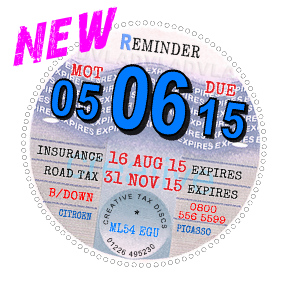


4. Tax Discs Overview

In 1978 the tax disc finally went digital (style 4) with the date being in numeric form, although for that initial year both styles were used concurrently. Three other styles would follow this with each adding additional levels of security and anti-counterfeiting measures until, finally, the curtain came down on them completely in 2014 when the Government decided to axe them.
We here at Creative, however, still supply them. And in all the correct colour combinations from 1921 right up to today…and even into the future if you want them!
Forgetting to pay your road tax could prove costly, since the fines are quite punitive (see The Law).
The tax disc plodded along from year to year with only variations of colour and the shape of the coloured block. Another change that made life a bit easier was when perforations were introduced in 1938. This made the removing of the outer selvedge easier so more of the disc remained after ham-fisted people had been to town on them. Mysteriously the perforations disappeared again between 1942 and 1952 perhaps as a result of war damage to the machinery.
The next big change came in 1957 when a major style change took place. A wide, coloured horizontal band now ran across the disc broken up with details about the HP/engine capacity, the unladen weight and the tax cost. These new style (2) discs appeared thoroughly modern after 35 years of design stagnation. In practice most postmasters dashed out the capacity and weight boxes since these elements were often unknown. This practice appears to have influenced things to such a degree that by 1960 the discs started to arrive at Post Offices pre-printed with the weight and HP boxes already dashed out.
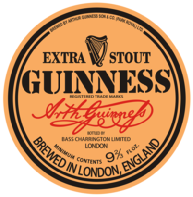
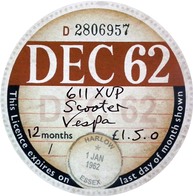
When the next change came about (style 3) in 1961 none of those extra details were required. Only the vehicle’s registration number, classification and make were required along with the number of months the disc was valid for and the cost of the tax. This disc was now fully coloured with various faded sections and the expiry month and year shown very prominently. Every four years, when the brown discs came round, there were stories of Guinness bottle labels being used in place of them.